Resistant Starch and Second-Meal Satiety Phenomena
Analysis of resistant starch fermentation, glucose response modifications, and persistent satiety signalling across sequential meals.
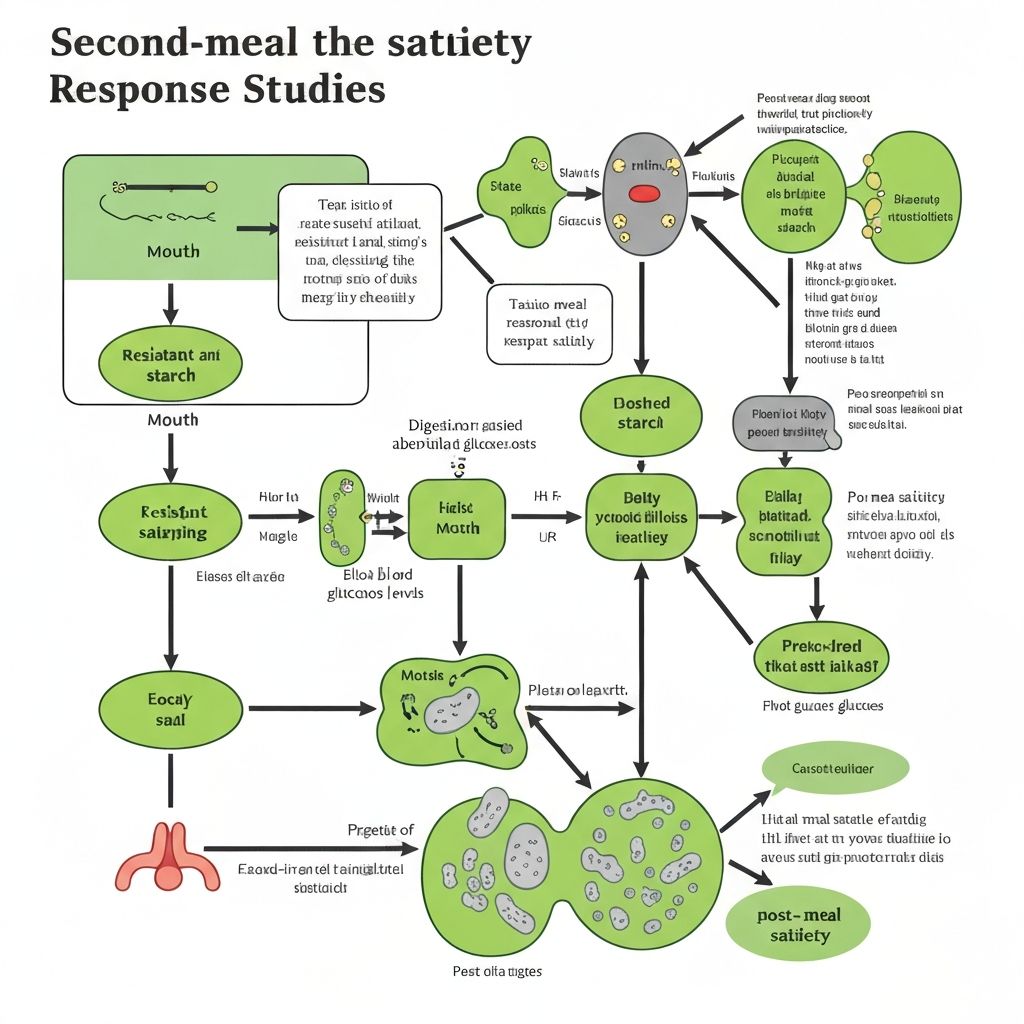
Classification and Biochemistry of Resistant Starch
Resistant starch is starch that escapes digestion in the small intestine and reaches the colon intact. It comprises approximately 2–8% of total starch in typical diets but can comprise up to 20–40% of starch in specially processed foods or legumes.
Types of Resistant Starch
| Type | Source | Mechanism of Resistance | Fermentability |
|---|---|---|---|
| RS1 | Physically inaccessible starch in whole grains, seeds, legumes | Physical entrapment within protein/fibre matrix | Readily fermentable |
| RS2 | Raw potatoes, raw plantain, high-amylose starches | Native B-type starch granule crystallinity; resistant to enzyme hydrolysis | Readily fermentable |
| RS3 | Retrograde starch from cooked-then-cooled potatoes, bread, rice | Retrogradation during cooling; crystalline structure reformed | Slowly fermentable; delayed peak SCFA |
| RS4 | Chemically modified starches; not naturally abundant | Cross-linking or esterification by food manufacturers | Variable (depends on chemical modification) |
RS2 and RS3 are the most abundant in typical diets. Their fermentability is high relative to fibre polysaccharides, producing robust SCFA yields.
Fermentation Kinetics and SCFA Production Timeline
Resistant starch undergoes colonic bacterial fermentation with a characteristic temporal profile:
- First 2 hours: Minimal SCFA production; starch reaches colon and is accessible to bacteria
- 2–4 hours: Exponential phase of fermentation; SCFA concentration rises sharply in faecal water
- 4–8 hours: Peak SCFA production; maximal plasma GLP-1 and PYY elevations occur
- 8–24 hours: Plateau and gradual decline in SCFA; most starch has been fermented
A single 20 g dose of resistant starch produces peak faecal SCFA concentrations of 150–250 mmol, comparable to or exceeding other fermentable fibres. The extended fermentation timeline (4–24 hours vs. 2–4 hours for pectin) creates a prolonged satiety window.
The Second-Meal Effect and Postprandial Glycaemia
The most distinctive feature of resistant starch is its capacity to influence metabolic and satiety responses to a subsequent meal consumed 4–8 hours later—the second-meal effect or glycaemic memory.
Mechanisms Contributing to the Second-Meal Effect
1. Colonic SCFA Production and Insulin Sensitivity
Propionate and butyrate from resistant starch fermentation enhance colonic insulin sensitivity and whole-body glucose homeostasis via GPR43/GPR41 signalling and histone deacetylase (HDAC) inhibition by butyrate. This metabolic priming improves insulin-mediated glucose clearance at the second meal, blunting postprandial glucose peaks.
2. Elevated GLP-1 and PYY Secretion
SCFA-stimulated GLP-1 secretion (peak 4–8 hours post-first meal) persists into the second meal window, slowing gastric emptying and enhancing postprandial nutrient sensing. Similarly, elevated PYY inhibits ileal contractions, prolonging nutrient exposure to satiety hormone-secreting cells.
3. Microbiota-Mediated Priming
Resistant starch fermentation shifts microbial composition toward SCFA-producing taxa (Faecalibacterium, Roseburia) within hours. This transient microbial enrichment may persist into the second meal window, maintaining enhanced SCFA production capacity.
Clinical Evidence: Glucose and Insulin Responses
Randomised controlled trials document second-meal glycaemic effects:
| Study Design | Resistant Starch Dose (First Meal) | Second-Meal Timing | Glucose Response Change | Insulin Response Change |
|---|---|---|---|---|
| Acute (crossover) | 20–30 g RS2 | 4 hours post-first meal | −15 to −25% (glucose AUC reduction) | −10 to −20% (insulin AUC reduction) |
| Acute (crossover) | 20–30 g RS3 | 4 hours post-first meal | −8 to −15% (smaller effect than RS2) | −5 to −12% |
| Chronic (4–8 weeks) | 15–25 g / day | Throughout intervention | Blunted; may diminish with time | Blunted; may diminish with time |
The second-meal effect is most robust within 4–8 hours; effects diminish beyond 12 hours. The magnitude of glucose reduction (15–25%) is clinically meaningful, though not all individuals respond uniformly.
Satiety and Energy Intake in the Second Meal
Beyond glycaemic effects, resistant starch influences subjective satiety at the second meal:
- Hunger ratings: Consumption of 20–25 g resistant starch at breakfast reduces hunger ratings at lunch (4 hours later) by 10–25% compared to control
- Fullness sensation: Elevated GLP-1 and PYY at the second meal window enhance postprandial fullness, reducing energy intake by 5–15%
- Appetite hormones: Fasting ghrelin (measured at second meal) is suppressed by 10–20% following resistant starch consumption at the first meal
- Energy intake: Ad libitum energy consumption at second meal is reduced by 3–12%, with high individual variability
Factors Modulating the Second-Meal Effect
Response variability to resistant starch is substantial, driven by several factors:
Resistant Starch Type
RS2 produces stronger second-meal effects than RS3, likely due to faster and more complete fermentation kinetics. Retrograde starch (RS3) ferments more slowly, with peak SCFA production occurring 6–12 hours post-ingestion, potentially missing the optimal satiety window.
Baseline Microbiota Composition
Individuals with high baseline levels of SCFA-producing bacteria demonstrate larger second-meal glycaemic and satiety effects. Conversely, those with low Faecalibacterium and Roseburia abundance show blunted responses despite fermentation occurring.
Meal Composition
Co-ingestion of resistant starch with protein or fat augments the second-meal effect, possibly through synergistic hormone secretion (CCK + GLP-1). High-fat first meals may delay gastric emptying of resistant starch, prolonging fermentation window.
Baseline Glycaemic Status
Individuals with impaired fasting glucose or type 2 diabetes demonstrate larger absolute glucose reductions at the second meal, suggesting that resistant starch's metabolic priming effect is most pronounced in those with suboptimal baseline insulin sensitivity.
Practical Sources and Dosage
Resistant starch is abundant in both natural and processed foods:
Natural Sources (per 100 g cooked weight)
- Cooled boiled potatoes: 7–15 g resistant starch
- Cooked white beans, lentils: 5–12 g
- Underripe bananas: 8–12 g
- Cooked-then-cooled rice: 5–10 g
- Whole grain bread (with seeds/grains): 3–6 g
Effective Dosing for Satiety Effects
Evidence suggests that 15–25 g resistant starch per day (consumed at breakfast or distributed across meals) produces measurable second-meal effects on satiety and glucose response. Doses below 10 g show minimal second-meal benefits; doses above 30 g offer marginal additional gains and may increase gastrointestinal symptoms.
Gastrointestinal Tolerance and Adaptation
Resistant starch, being readily fermentable, produces more gas and colonic distension than less-fermentable fibres:
- Acute consumption of 20–30 g resistant starch may produce bloating and flatulence in 20–40% of individuals
- Gradual introduction (starting with 5–10 g daily, increasing over 1–2 weeks) reduces symptom incidence by ~50%
- Adaptation occurs within 2–4 weeks; microbiota upregulate SCFA uptake and gas reabsorption, diminishing bloating
- Chronic use (8+ weeks) often shows reduced subjective satiety effects despite sustained hormonal responses, suggesting habituation
Key Takeaways
Resistant starch is unique among dietary fibres in producing pronounced second-meal effects—sustained satiety and improved glucose response to a subsequent meal 4–8 hours later. This extended temporal profile is attributable to delayed colonic fermentation (4–8 hour peak SCFA production) and resultant GLP-1/PYY secretion, which persists into the second meal window. Clinical evidence supports 15–25 g daily intake for satiety and glycaemic benefits. Individual responses vary based on baseline microbiota, metabolic status, and resistant starch type. Practical sources include cooled potatoes, legumes, and underripe bananas. Understanding resistant starch's distinct fermentation kinetics and second-meal effects contextualises its role as a satiety-enhancing dietary component with metabolic benefits extending beyond immediate postprandial responses.